October 2026
Dwell Time Beats Speed: How Polish Junction Design Rewards Patience
Polish junction design shows why waiting at intersections may move traffic better than rushing through, challenging assumptions about speed and commute time
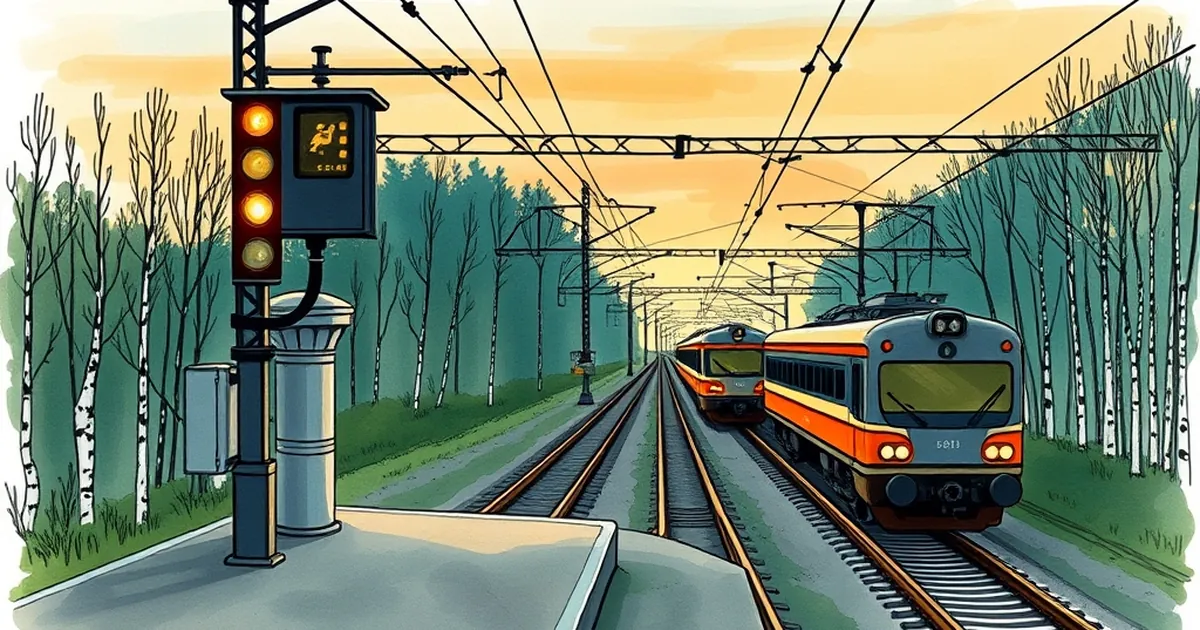
Every morning, thousands of drivers on ulica Marszałkowska in Warsaw and along Aleje Jerozolimskie inch toward the same handful of intersections, watching the signal head for the first flicker of amber. The assumption baked into that impatience is that speed through the junction is what matters: clear it fast, clear it first, and the commute compresses. But a growing body of Polish traffic engineering practice, echoed by behavioral research on waiting and reward, suggests the opposite. The junctions that feel slowest — the ones that force you to sit, watch, and wait — are often the ones that move the most people per hour, and the psychology of that trade-off is more interesting than the engineering.
The counterintuitive economics of standing still
Polish junction design has quietly shifted over the past fifteen years. The old model, inherited from the postwar era and reinforced by a car-first planning culture through the 1990s, optimized for vehicle throughput measured in seconds saved per driver. That meant short cycle times, aggressive green splits, and right-turn-on-red wherever geometry allowed.
The newer model, visible in rebuilt junctions in Kraków, Wrocław, Gdańsk, and the Silesian conurbation, optimizes for something less intuitive: total delay across all users, including pedestrians, cyclists, and tram passengers. A junction that gives cars a long green but strands pedestrians for ninety seconds is, by this metric, a failure — even if individual drivers love it.
The Polish road safety observatory at the Instytut Transportu Samochodowego and the national road authority's design guidelines now lean toward longer cycle times at major intersections, more protected phases, and dedicated tram priority. Longer cycles mean more dwell time for everyone. They also mean fewer conflict points per hour, fewer amber-gambling decisions, and measurably fewer serious collisions.
What behavioral research says about waiting at a red light
The instinct to bolt through an amber light is not a character flaw. It's a predictable response to what behavioral psychologists call variable-ratio reinforcement — a schedule in which a reward arrives after an unpredictable number of attempts. You run the amber, you make it, you feel a small win. You run it again, you make it again. The reinforcement is intermittent, which is exactly what makes it sticky.
Daniel Kahneman's work on loss aversion adds a second layer. Drivers don't experience a red light as a neutral event; they experience it as a loss of time already owned. The psychological weight of that loss is roughly twice the weight of an equivalent gain. So a junction that shaves thirty seconds off the average trip but occasionally forces a full ninety-second wait feels worse than its arithmetic suggests — and drivers respond by taking more risks at the margin.
Polish researchers have documented this. A 2019 study of amber-light behavior at signalized intersections in the Warsaw metropolitan area found that the probability of a driver entering on amber rose sharply when the preceding red phase had been long, and when the driver had already waited through at least one full cycle. Patience, in other words, has a budget, and junction design either respects that budget or burns through it.
Dwell time as a design tool, not a bug
This is where the Polish approach gets genuinely interesting. Rather than trying to eliminate dwell time, several recent junction rebuilds have leaned into it deliberately — using the pause to reorganize the space.
The all-red pedestrian scramble
At the rebuilt junction of ulica Świdnicka and ulica Kazimierza Wielkiego in Wrocław, the design includes a full pedestrian scramble phase: all vehicle movements stop, and pedestrians cross in every direction, including diagonally. For drivers, this adds roughly twenty to thirty seconds of dwell per cycle. For pedestrians, it eliminates the two-stage crossing and cuts their average wait by more than half.
The junction now moves more people per hour than it did before the rebuild, despite moving fewer cars per green phase. The dwell time wasn't removed; it was redistributed to the mode that could absorb it with the least behavioral cost.
Tram priority as a patience multiplier
In Kraków, the tram priority system installed along the Podgórze corridor uses a different logic. Trams get extended greens and, where necessary, cars get held at the stop line for an extra cycle. The dwell time imposed on drivers is real — typically fifteen to forty seconds at peak.
But the behavioral effect is counterintuitive. Because the wait is predictable and visibly tied to a tram passing, drivers accept it with far less frustration than they accept a random red. Predictability, it turns out, matters more than duration. A driver who knows why they're waiting is a driver who doesn't run the amber.
The risk-taking trap at short-cycle junctions
Short-cycle junctions — the ones that flip every forty or fifty seconds — create a specific behavioral hazard. They train drivers to expect a quick turn of the light, which makes the occasional long wait feel like an anomaly worth gambling against.
The data supports this. Collision records from several Polish cities show that serious injury crashes at signalized intersections cluster disproportionately at junctions with cycle times under sixty seconds, especially where the amber phase is short and the all-red clearance is minimal. The mechanism is straightforward: short cycles produce more phase transitions per hour, and every phase transition is an opportunity for a risk-taking decision.
Longer cycles reduce the number of transitions, which reduces the number of gambles, which reduces the number of crashes. The dwell time that drivers experience as an annoyance is, from a safety standpoint, the point.
What this means for the next round of Polish junction rebuilds
The practical implication is not that Poland should make every junction slow. It's that dwell time should be treated as a design variable with a psychological dimension, not just an engineering residual to be minimized.
Three directions are worth watching.
First, predictable dwell beats short dwell. Junction designs that communicate why a wait is happening — a visible tram, a countdown, a consistent cycle — reduce risky behavior more effectively than designs that simply shorten the wait. Polish cities experimenting with pedestrian countdown displays are already seeing this effect at crossings, and the logic extends to vehicle phases.
Second, mode-specific patience budgets. Pedestrians, cyclists, tram passengers, and drivers have different tolerances for waiting, and different consequences when that tolerance is exceeded. A junction that imposes a ninety-second wait on a pedestrian is imposing a different cost than one that imposes the same wait on a car. The next generation of Polish junction guidelines should make that asymmetry explicit.
Third, the amber decision is a design outcome, not a driver failure. Every amber-light gamble is a junction telling its users that the reward for impatience is real. The fix isn't more enforcement or more cameras; it's designing junctions where the reward for patience is equally legible — a green that arrives when promised, a crossing that opens when expected, a system that behaves like a system rather than a slot machine.
The junctions that feel slowest are often the ones quietly doing the most work. That's not a paradox. It's a design choice, and Poland is increasingly making it on purpose.