October 2026
Kolej's Disappearing Siding Owners Leave Tracks to Rust
Poland's abandoned rail sidings reveal a tangled question of ownership, leaving rusting tracks that burden towns and endanger pedestrians
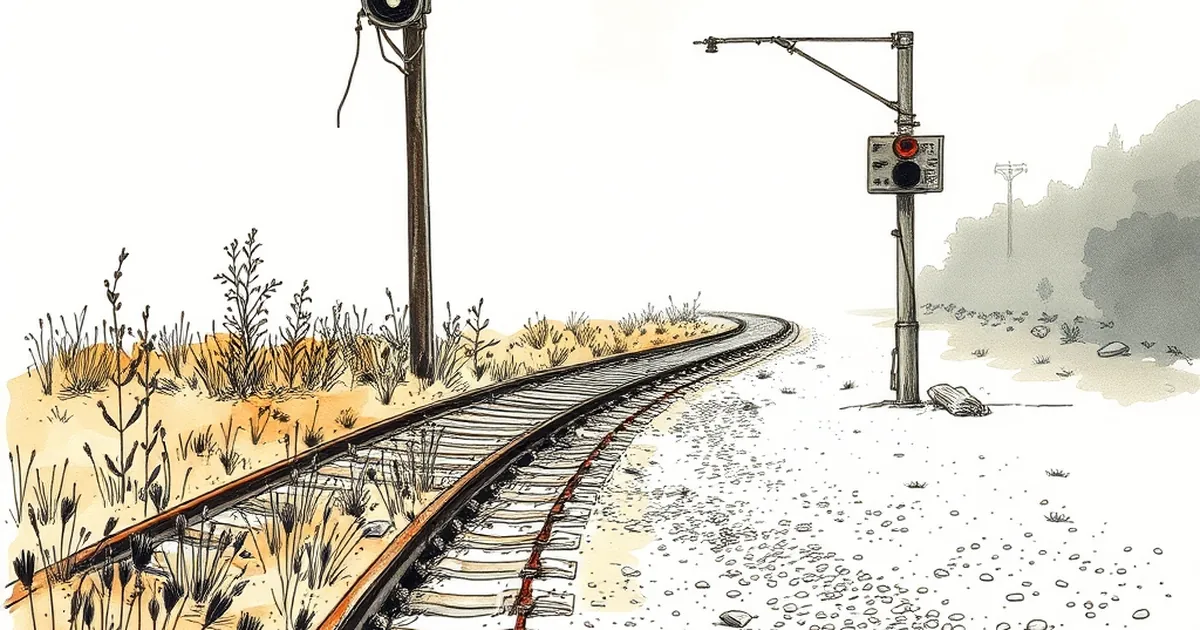
Poland's rail network carries a quiet problem on its shoulders — thousands of short spur lines, sidings and loading ramps that once fed factories, coal yards and grain silos. The companies that owned them have largely vanished. So who is now responsible for the rusting steel that crosses roads, drains municipal budgets and occasionally swallows a pedestrian's foot?
The answer, as I found while digging through county records and talking to local officials, is messier than most people expect.
The Anatomy of a Disappearing Owner
A railway siding — bocznica kolejowa in Polish — is not the same as a main line. It is a short branch, usually a few hundred metres, that connects a private business to the national network. Under Polish law, such infrastructure belongs to whoever built or inherited it, not automatically to PKP. When the factory that built it goes bankrupt, the siding does not disappear with the paperwork. It stays in the ground.
The problem is that ownership often dissolves faster than the track does. A company is liquidated, its assets are sold in pieces, and the siding — worthless to most buyers — is simply left off the asset register. The land underneath may end up in the hands of the State Treasury or a municipality. The rails on top may legally belong to a defunct spółka that no longer exists in any registry.
I spoke with a clerk in a Silesian powiat who spent two years trying to establish who owned a 400-metre spur running behind a housing estate. The answer she eventually received from the courts was, in her words, "nobody and everybody." That is not a legal category. It is a bureaucratic dead end.
Why This Keeps Happening
Three forces drive the pattern.
First, the collapse of heavy industry in the 1990s and 2000s severed the commercial logic of most private sidings. A coal depot without a mine, a grain ramp without a working elevator — these assets stopped earning anything.
Second, Poland's inheritance and liquidation rules are slow. A company can be struck from the register while its physical assets remain in limbo for decades.
Third, nobody wants to pay for demolition. Dismantling a siding costs tens of thousands of zloty. Leaving it costs nothing — until someone gets hurt.
What Rusting Track Actually Costs
The visible cost is safety. Unguarded level crossings on abandoned sidings are a known hazard, particularly in smaller towns where children use the tracks as shortcuts. In 2022, a man in Lower Silesia successfully sued a municipality after tripping on a rail embedded in a public road — the council had argued for years that it was not the owner.
The invisible cost is economic. A dormant siding sterilises land. Developers will not build on a plot with unresolved rail infrastructure because the ownership question can resurface years later. Municipalities that want to rezone a post-industrial area often discover that a single forgotten spur blocks the entire project.
There is also a maintenance bill that lands, eventually, on the taxpayer. When a rusting siding crosses a public road, the road authority is obliged to keep the crossing safe — even if it does not own the rails. That means periodic inspections, occasional repairs, and legal fees. None of it is budgeted for.
The Case of the Orphaned Ramp
A concrete example sticks with me. In a town near Poznań, a grain loading ramp sat unused for eighteen years after its owner, an agricultural cooperative, was dissolved in the early 2000s. The land was sold to a private investor in 2011, but the sale contract excluded "rail infrastructure of unknown status."
When the investor tried to build a warehouse in 2019, the building inspector flagged the ramp as a potential hazard. The investor sued the gmina. The gmina sued the State Treasury. The Treasury pointed to the original cooperative's liquidation file, which had been archived and, according to the clerk I spoke with, "basically lost."
Three years and roughly 90,000 złoty in legal costs later, the ramp was demolished by the investor under a settlement that satisfied nobody. The track itself — about 200 metres — is still there.
Who Is Supposed to Fix This?
Formally, several bodies could act. The Office of Rail Transport (UTK) regulates the network but has limited power over private sidings that are not connected to active traffic. The State Treasury can take over abandoned assets, but only through a slow administrative procedure that requires a clear owner to hand them over — which is exactly what is missing.
Municipalities have the strongest practical interest, because they bear the safety and planning consequences. But they cannot legally demolish property they do not own, and courts are reluctant to grant adverse possession against an entity that technically still exists on paper.
There have been attempts at reform. A 2019 amendment to the Railway Transport Act clarified some maintenance obligations, but it addressed active infrastructure, not orphaned sidings. Industry groups have lobbied for a central register of private rail assets, similar to the land and mortgage register, but the proposal has stalled repeatedly.
What Some Gminas Are Doing Anyway
Faced with inaction from Warsaw, some local governments have taken pragmatic routes.
- Inventory-first approach. A few powiats have commissioned full audits of rail infrastructure on their territory, mapping every metre of track and cross-referencing it against company records. The audit itself does not solve ownership, but it creates a paper trail that strengthens the gmina's position in negotiations.
- Negotiated demolition. Where a former owner or its successor can be identified, some gminas have offered to cover part of the demolition cost in exchange for a formal transfer of title. It is not cheap, but it is faster than court.
- Reuse instead of removal. A handful of towns have converted short sidings into greenways or cycle paths, a model borrowed from Germany and the UK. The rails come up, the corridor stays, and the land becomes productive again.
None of these is a systemic fix. They are local workarounds for a national gap.
What to Watch Next
If you own property near a disused siding, or you sit on a gmina council, the practical move is to document what is there before someone else does. Photograph the track, note its condition, and request the land registry extract (odpis z księgi wieczystej) for the parcel it crosses. If the owner is unclear, that record is your starting point — and often your only leverage.
For everyone else, the story of Poland's disappearing siding owners is a reminder that infrastructure does not vanish when its purpose does. It waits. It rusts. And eventually, it becomes somebody's problem — usually the person who never wanted it in the first place.