October 2026
What Poland's new bus lanes cost per kilometre
Poland's bus lanes cost anywhere from a few hundred thousand to over 20 million złoty per kilometre, and the gap reveals how hard each project really was
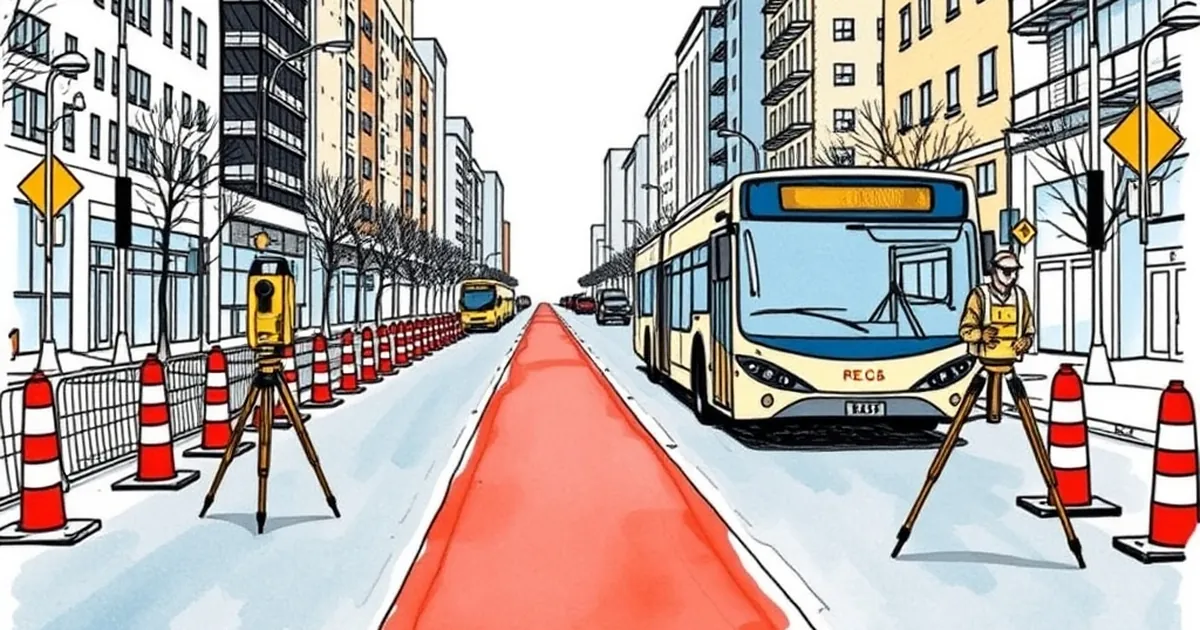
A dedicated bus lane sounds like a cheap win: paint a stripe, hang a few signs, and watch the buses glide past the traffic. Then the invoice arrives. In Poland, where cities from Kraków to Gdańsk are racing to carve out road space for public transport, the real cost per kilometre ranges from a few hundred thousand złoty to well over 20 million — and the gap tells you almost everything about how hard the job actually was.
What "cost per kilometre" actually means in Poland
There is no single price tag for a bus lane, and anyone quoting one number is usually selling something. The cost depends on whether you are repainting an existing lane, rebuilding a street, or cutting a tunnel under a railway.
The cheapest category is the organisational bus lane — a lane marked with paint and signs on a road that already has enough width. These are the bargains of the sector, typically landing between 200,000 and 800,000 zł per kilometre, mostly for signage, marking, and traffic-light reprogramming. Warsaw's early BUS lanes on Trasa Łazienkowska and several corridors in Łódź fell into this bracket.
The mid-range is the capital reconstruction of a street, where the road surface, drainage, and pavements are rebuilt while the lane is added. Here the figures jump to roughly 5–15 million zł per kilometre, because you are not really paying for a bus lane — you are paying for a road renovation that happens to include one.
At the top sit engineering-heavy projects: bus lanes threaded through junctions, over bridges, or with dedicated bus-stop bays and priority signals. These can exceed 20 million zł per kilometre, and a short stretch can blow the average out of the water.
Why the same lane costs three times more in two cities
A bus lane in Rzeszów and a bus lane in central Wrocław may look identical on a map. They are not. Land acquisition, underground utilities, tram tracks, and the number of junctions per kilometre drive the price far more than asphalt does.
In dense, pre-war street grids, every metre of new lane forces designers to relocate water mains, gas lines, and telecoms. That is where the money goes — not into the paint.
The numbers from real Polish projects
Let's look at what cities have actually spent, based on publicly reported tender results and municipal budgets.
Warsaw
Warsaw has the country's longest and most mature network, with around 100 km of bus lanes across the city. The newer, more complex sections — like the bus corridor along Trasa W-Z and the extensions toward Wilanów — have cost in the range of 8–18 million zł per kilometre once junction works and bus-stop upgrades are counted.
The city's own transport authority has repeatedly pointed out that the bus lane itself is often a small line item inside a much larger street-rebuilding contract. That is a crucial distinction when reading headlines about "the most expensive bus lane in Poland."
Kraków
Kraków's bus lanes on Aleje Trzech Wieszczów and the corridors feeding Nowa Huta have been built largely as part of broader road modernisations. Reported costs cluster around 6–14 million zł per kilometre, with the higher end reserved for sections where tram tracks and bus lanes had to be separated.
A concrete example: when Kraków rebuilt a section of the al. Jana Pawła II corridor, the bus lane element was bundled into a contract dominated by tram infrastructure. Splitting out the bus-lane share produced a figure that looked absurdly high — because it was never a standalone bus lane.
Gdańsk and Tricity
Gdańsk's bus lanes along al. Grunwaldzka and the corridors toward Osowa have come in at roughly 4–10 million zł per kilometre. The Tricity's wide post-war arterials make lane carving cheaper than in Kraków or Wrocław, where the street geometry fights back.
Smaller cities
In cities like Olsztyn, Białystok, or Kielce, well-planned organisational lanes have been delivered for under 1 million zł per kilometre. These projects rarely make national news — precisely because they are cheap and uncontroversial.
Where the money really goes
If you strip away the headlines, the cost breakdown of a Polish bus lane looks roughly like this:
- Road surface and drainage: 30–45%
- Junction redesign and traffic signals: 20–35%
- Bus stops and passenger infrastructure: 10–20%
- Signage, marking, and design work: 5–10%
- Land and utility relocation: 0–25%, wildly variable
The last item is the wildcard. A single unmapped gas main can add millions to a project that was supposed to cost a few hundred thousand.
The hidden cost nobody budgets for
There is also the political cost. Removing a general-traffic lane to give it to buses angers drivers, and that anger shows up in consultations, local elections, and occasionally in court. Some cities have spent years and significant legal fees defending bus-lane decisions — money that never appears in the per-kilometre figure.
What to watch next
Poland is entering a phase where the easy bus lanes are largely built. The remaining corridors run through the hardest, most expensive terrain: city centres, bridge approaches, and junctions that were never designed for dedicated public transport.
Two trends will shape the next round of costs. First, EU cohesion funds for 2021–2027 are pushing cities toward integrated projects that bundle bus lanes with tram lines, bike paths, and pedestrian zones — which makes the "bus lane cost" harder to isolate but often cheaper in total. Second, bus priority at signals — cameras, transponders, and adaptive traffic control — is becoming a bigger share of the budget than the asphalt itself.
For anyone trying to compare projects, the practical rule is simple: ask what else was built at the same time. A bus lane quoted at 15 million zł per kilometre is usually a street, a junction, and a bus lane wearing one price tag. A bus lane quoted at 400,000 zł per kilometre is usually just paint — and sometimes, that is exactly what a city needs.