September 2026
Why Poland's New Bridges Skip the Cheapest Design
Poland's bridge tenders reveal why the cheapest bid rarely wins, as quality and durability criteria reshape public procurement decisions
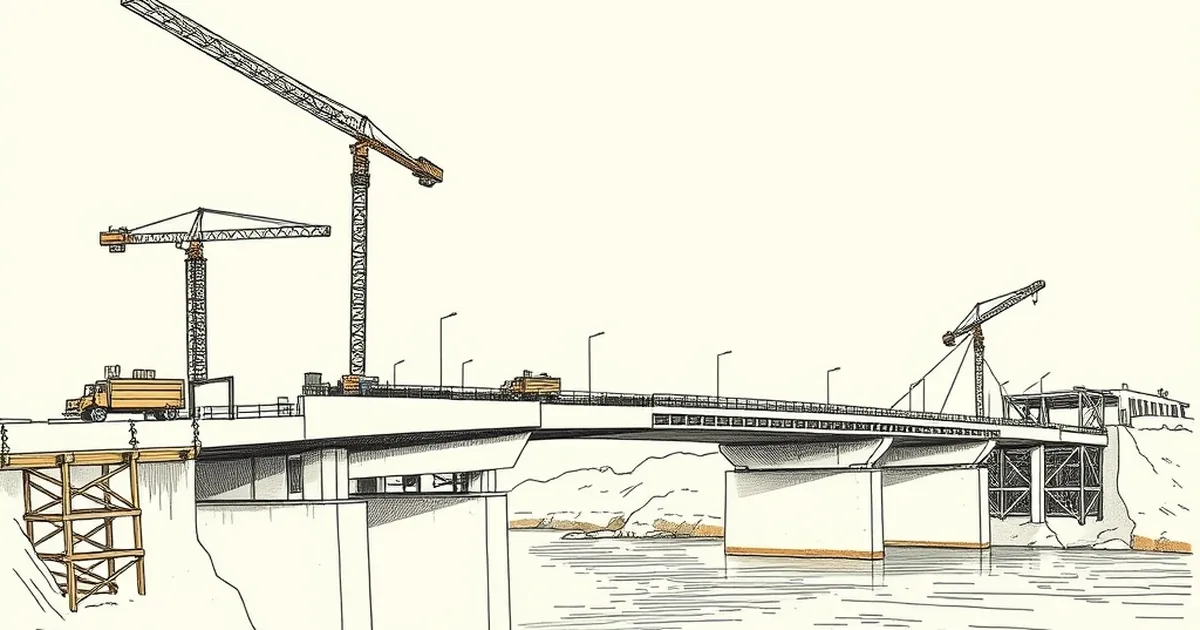
Poland has spent the better part of two decades rebuilding its road network, and the bridges along those routes are among the most visible symbols of that effort. Yet anyone comparing tenders will notice something odd: the winning designs are rarely the cheapest ones on the table. So why does the cheapest bid keep losing?
The Cheapest Bid Is Rarely the Winning Bid
In Polish public procurement, price stopped being the only game in town a long time ago. Under the Public Procurement Law, contracting authorities can — and increasingly do — weight criteria like technical quality, durability, warranty length, and lifecycle cost alongside the sticker price. For bridge projects, that shift has been decisive.
The logic is straightforward once you look at what a bridge actually costs over its life. A cheaper structure might save a few million zloty at construction, but if it needs major repairs in fifteen years instead of forty, the state ends up paying far more. Road authorities like GDDKiA have learned this the hard way, and the tender documents now reflect it.
What "Quality" Actually Means in a Bridge Tender
When evaluators talk about quality, they are not being vague. They are looking at concrete things: the type of structural system, corrosion protection for steel elements, the quality of waterproofing, and the expected maintenance regime. A design that uses higher-grade concrete or a more robust bearing system scores better — even if it costs more upfront.
Non-price criteria can carry 40% or more of the total score in some tenders. That is enough to flip the ranking entirely. A bid that is 10% cheaper but technically weaker can easily lose to a more expensive, better-engineered proposal.
The Ghost of Past Failures
Poland's caution is not theoretical. The country has a long, painful memory of infrastructure that aged badly or failed outright. The most famous case is the Katowice trade hall roof collapse in 2006, which killed 65 people. That disaster reshaped how Poland thinks about structural safety and design responsibility.
Bridges have had their own scares. In 2018, a section of the Estakada Gdańska in Warsaw — a major elevated roadway — had to be partially closed after inspectors found worrying defects. The structure had been in service for only a few years. Repairs dragged on, traffic was rerouted, and the reputational damage spread across the entire procurement system.
More recently, the collapse of a bridge section in Baltimore in 2024 sent ripples through engineering circles worldwide, including Poland. It reminded everyone that redundancy and inspection access are not luxuries — they are design requirements.
Why Engineers Push Back on Low-Ball Bids
Polish bridge engineers have been vocal for years about what they call "undercutting." A contractor wins with a price that barely covers materials, then cuts corners on things that are hard to inspect later: reinforcement spacing, concrete curing, or the quality of expansion joints. By the time problems appear, the contractor may be gone or bankrupt.
This is why many public clients now require not just a price, but a detailed methodology, a quality assurance plan, and sometimes a full lifecycle cost analysis. The cheapest number on the envelope is no longer treated as the most honest one.
The Shift Toward Lifecycle Thinking
The real change in Polish bridge procurement is the move from construction cost to lifecycle cost. Instead of asking "what does it cost to build?", authorities increasingly ask "what does it cost to own for fifty or a hundred years?"
That calculation includes inspection, routine maintenance, major rehabilitation, and eventual replacement. A steel bridge with poor corrosion protection might be cheap to erect but expensive to keep standing. A concrete structure with proper cover and drainage might cost more initially but need almost nothing for decades.
The A1 motorway bridges and the newer S-route crossings in central Poland show this thinking in practice. Designers there have favored robust, low-maintenance solutions over the lightest possible structures — even when the tender price was higher.
What This Means for Contractors
For contractors, the message is clear: competing on price alone is a losing strategy in Polish bridge tenders. Firms that invest in engineering capacity, documented quality systems, and a track record of durable structures are the ones winning the big contracts.
Smaller players who relied on aggressive pricing are being squeezed out. That is not necessarily bad for the market — it raises the average quality — but it does concentrate work among a handful of large, well-capitalized firms. That concentration is a risk worth watching.
Where This Is Heading
Poland is still building. The CPK transport project, the ongoing motorway extensions, and dozens of local road upgrades will need hundreds of new bridges in the coming decade. The procurement philosophy that has taken root — quality over cheapness — is likely to harden rather than soften.
Expect to see more tenders where non-price criteria dominate, more use of BIM to verify design quality before construction, and more pressure on contractors to prove they can maintain what they build. The era of the cheapest bridge is quietly ending.
For anyone following Polish infrastructure, the practical takeaway is this: read the tender criteria, not just the price. The winning bid tells you what the client actually values — and in Poland, that is increasingly durability, not discounts.