September 2026
The Quiet Cost of Poland's Temporary Bus Platforms
Poland's temporary bus platforms hide real costs that passengers and cities absorb long after the construction crews have moved on
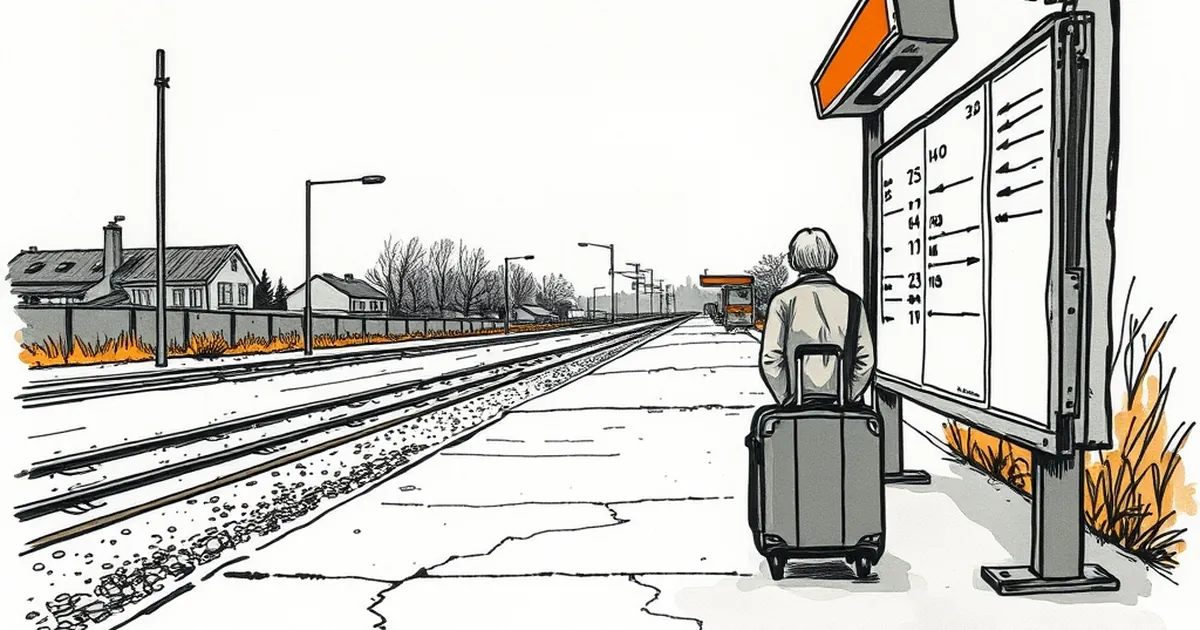
Every few weeks, another Polish city announces the same thing with the same upbeat press release: a key street is closing for a tram or road rebuild, and a temporary bus platform will keep passengers moving. The stop boards go up, the yellow markings appear, and everyone nods at the pragmatism of it all. But who actually pays for that "temporary" solution — and what happens when temporary quietly becomes the permanent state of things?
I've been watching these substitute stops for years, first as a commuter in Kraków and Wrocław, then as someone who now reads procurement notices for fun. The pattern is remarkably consistent, and the costs are far less visible than the asphalt.
What a Temporary Platform Actually Is
On paper, a temporary bus platform is a simple piece of transport engineering. You take a stretch of pavement or roadway near a closed stop, paint a bay, bolt down a sign, maybe add a shelter and a timetable board, and route buses there for the duration of the works.
In practice, "duration" is the word that does the damage. Polish road and tram investments routinely run over schedule — a 14-month contract becomes 22 months, sometimes 30. The temporary platform isn't built for that, but it has to survive it.
The physical infrastructure reflects this mismatch. Temporary bays are often shallower than standard ones, the kerb height is wrong for low-floor buses, and drainage is an afterthought. After two winters of salt and freeze-thaw, the surface starts to break up, and nobody owns the repair because the investment contract technically belongs to the contractor.
The Stop That Wasn't Supposed to Last
A concrete example sticks with me. In Wrocław, during the long reconstruction of a major artery, a substitute stop was set up on a side street to serve several tram lines. It was meant to operate for about a year. It ended up serving passengers for closer to three.
By the second year, the shelter had lost two panes, the real-time departure display was dark, and the only lighting came from a nearby shop window. Passengers waiting after 8 p.m. stood in a spot with no working information and poor visibility. The city wasn't negligent — it was simply managing a temporary asset with a temporary budget, long after the word stopped applying.
That gap between the label and the reality is where the quiet cost lives.
The Costs You Don't See in the Tender
When a project is tendered, the temporary traffic organization is usually priced as a line item — sometimes a few hundred thousand złoty, sometimes a couple of million for a large junction rebuild. That figure covers installation, signage, and basic maintenance during the contract period. It rarely covers what happens when the period stretches.
Time Loss for Passengers
The clearest cost falls on passengers, and it's measured in minutes that never appear on any invoice. A substitute stop is often 200 to 400 metres from the original, which adds walking time for everyone and is genuinely punishing for older riders, parents with prams, and people with mobility aids.
Then there's the transfer penalty. When a tram stop moves, bus connections that were designed around it no longer line up. A journey that took 24 minutes becomes 35, not because buses are slower, but because the network's geometry was broken and nobody redesigned the connections.
Multiply that by tens of thousands of daily passengers over two or three years, and you get a number in the millions of hours. No city budgets for it, because it's invisible in the accounts.
Safety and Accessibility Gaps
Temporary platforms frequently fail basic accessibility standards that the permanent stop met. Kerb heights are inconsistent, so boarding a low-floor bus still involves a step down or up. Tactile paving is often missing entirely.
There's also the pedestrian problem. Substitute stops get placed where there's space, not where there's a safe crossing. I've seen temporary bays that force passengers to cross a road at an unmarked point, in the dark, because the nearest zebra is 150 metres away. That's a design failure dressed up as a temporary measure.
The Maintenance Freefall
Here's the structural issue: nobody owns a temporary asset. The contractor's obligation typically ends when the works are accepted. The city's roads authority may not formally take over a facility that was never built to its standards. The transport operator runs buses through it but doesn't maintain the pavement.
So the stop degrades. Lighting fails, shelters are vandalised and not repaired, information boards go stale. Passengers respond rationally — they stop trusting the stop, and some stop using the route altogether. That demand loss is real, and it makes the case for future public transport investment harder to argue.
Why Cities Keep Doing It This Way
It would be easy to blame incompetence. The truth is more uncomfortable: the incentives point this way.
Tendering rules reward the lowest compliant bid, and temporary traffic organisation is an easy place to shave costs. Contract schedules assume the works finish on time, so there's no budget line for "what if it takes twice as long." And politically, the visible win is the finished tram line, not the shabby substitute stop that carried passengers in the meantime.
There's also a genuine skill gap. Designing a good temporary stop requires the same thinking as designing a permanent one — catchment, crossings, connections, accessibility — but compressed into a rushed pre-construction phase. Too often it's treated as a drawing exercise rather than a transport problem.
What Good Practice Looks Like
Some Polish cities have started to get this right, and the differences are not expensive. Gdańsk and Poznań have both used higher-quality temporary shelters with working real-time information on major closures. Kraków has experimented with relocating stops less aggressively, keeping walking distances shorter even if it means a slightly more complex traffic layout.
The common thread is treating the temporary stop as a real stop with a defined service life, not as a formality. That means specifying kerb heights, lighting, tactile paving, and information systems in the contract — and crucially, tying maintenance obligations to the actual end of works, not the planned end.
A Practical Test for the Next Closure
The next time your city announces a substitute stop, here's a simple checklist worth applying. Is the walking distance from the original stop under 250 metres? Is there a safe, lit crossing within 50 metres? Does the kerb work for a low-floor bus? Is there a working departure board, and who maintains it?
If the answer to any of these is no, ask the question in writing — to the city hall, the transport authority, or the contractor. Public pressure is one of the few mechanisms that reliably moves temporary infrastructure up the priority list.
Better still, cities could adopt a straightforward rule: any substitute stop expected to operate for more than six months must meet permanent standards, with a maintenance contract that runs until the works are actually signed off. That single change would eliminate most of the quiet costs described here.
Poland is going to keep rebuilding its transport network for at least another decade, and that's a good thing. The measure of how well we do it isn't only the shiny new tram line at the end — it's whether the passenger standing in the rain at a substitute stop in year three is treated as a customer or an inconvenience.