September 2026
Who really owns Poland's roadside rest areas?
Poland's 400 roadside rest areas hide a tangled mix of state, private, and local ownership that few drivers ever realise
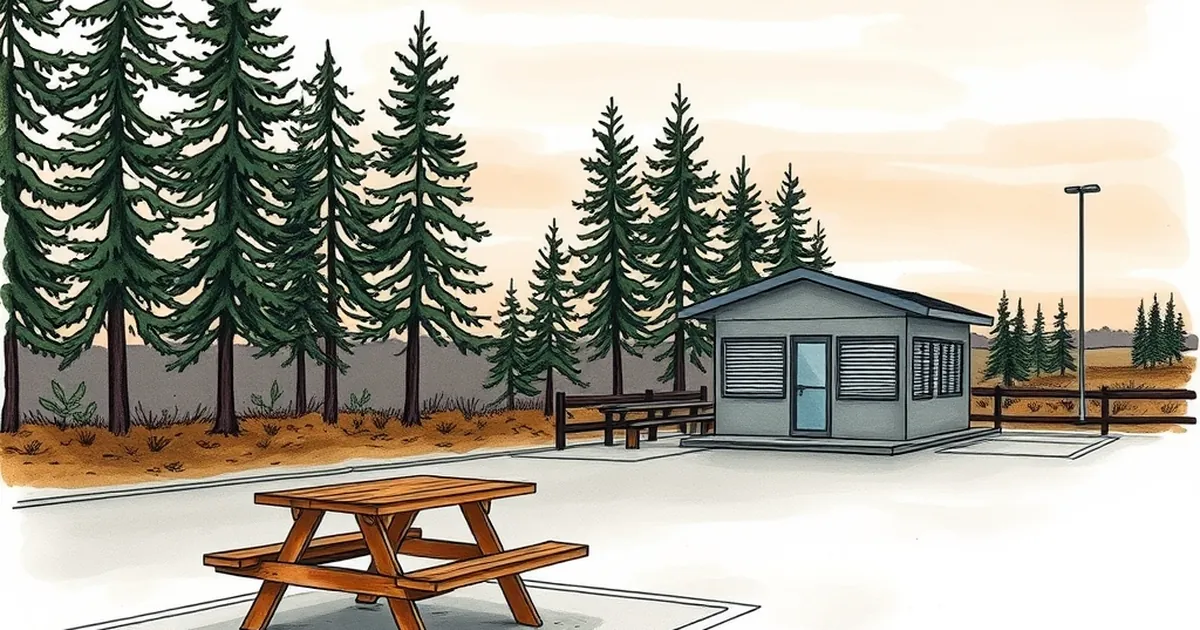
You pull off the S8 near Syców, follow the sign for the "Miejsce Obsługi Podróżnych," and park. There's a toilet block, a few picnic tables, a truck idling with curtains drawn, and a Żabka or a Shell logo depending on which one you picked. You assume someone owns this place, maintains it, and collects money from it. The truth is stranger: that patch of asphalt and grass might belong to the state treasury, a private concessionaire, a local council, or some combination of all three, with a chain of leases in between that almost nobody can untangle at a glance.
Poland has roughly 400 designated rest areas along its motorways and expressways, plus hundreds more informal pull-offs along national and regional roads. Who actually holds the deed, who holds the keys, and who pockets the profit are three different questions. And the answers have changed dramatically over the past two decades.
The Two-Tier System Nobody Explains at the Roadside
The first thing to understand is that Poland's roadside rest infrastructure splits into two very different worlds: the Motorway Service Areas (Miejsca Obsługi Podróżnych, or MOPs) on tolled motorways and expressways, and the ordinary roadside rest stops on national roads.
MOPs are the big ones. They come in three classes: MOP I (basic parking and toilets), MOP II (adds fuel and a small retail point), and MOP III (full-service, with restaurants, showers, and sometimes a hotel). These are the ones with the BP, Orlen, Circle K, or Shell signs you recognize.
The land under them is almost always owned by the State Treasury, not by the fuel company. The General Directorate for National Roads and Motorways (GDDKiA) administers it. But GDDKiA doesn't run the restaurant or pump the diesel. It leases the plot, usually through a tender, to an operator for a fixed term, often 20 to 30 years.
That lease is the crux. The operator builds the facility, pays rent to the state, and recoups its investment by selling you coffee at a motorway premium. So when you buy a 12-złoty espresso at a MOP III outside Poznań, roughly none of that goes to the road authority. It goes to a private company that won a concession.
When the Motorway Concessionaire Got the Land
For a stretch of the A2 and A4, the picture was even more layered. Under the original motorway concession agreements signed in the 1990s and early 2000s, private concessionaires like Autostrada Wielkopolska and Stalexport Autostrada Małopolska not only built and operated the road, they also controlled the MOPs along it.
That meant the state effectively handed over the rest-area business as part of the deal. GDDKiA has spent years clawing some of this back through renegotiations, but the legacy structure still shows. Some MOPs on the A4 near Kraków operate under lease arrangements that date to the original concession and won't fully revert until the 2030s.
For the driver, this matters less than you'd think — the toilets are still there, the fuel still flows. But for anyone trying to understand who owns what, it's a reminder that "public road" and "public rest area" are not the same legal category.
The Quiet World of National Road Rest Stops
Step off the motorway and the ownership picture gets messier. Along national roads (drogi krajowe), you'll find rest stops that range from a paved lay-by with a bin to a small complex with a bar and a motel.
Many of these sit on land owned by GDDKiA, but some sit on municipal land, and a surprising number sit on private plots that predate the road itself. When a road was widened or rerouted, the rest stop often stayed where it was, on a parcel that the road authority never expropriated.
I once stopped at a rest area on the DK12 near Radom where the "owner" turned out to be a local family that had run a small bar there since the 1980s. The land was theirs. GDDKiA maintained the road but had no claim on the plot. The family paid no rent to anyone. They just had a good location and a grandfathered business.
The Municipal Angle
Some gminas (communes) have taken a more active role. A few have built and run their own rest areas as a way to capture tourist traffic and support local businesses — a model more common in Małopolska and Podkarpacie than in the wealthier west.
The catch is that municipal rest stops often lack the funding for proper maintenance. A gmina with a tight budget can build a toilet block but struggle to staff it. That's why you sometimes find a municipal rest area with a locked WC and a sign pointing to the nearest petrol station five kilometers away.
Who Actually Maintains What
Maintenance is where the ownership confusion becomes a real problem. If a pothole opens up in a MOP parking lot, whose job is it to fix it? If the lights go out at a national road rest stop, who pays the electricity bill?
The general rule is: whoever holds the lease or the deed. GDDKiA maintains the road surface and the immediate shoulder, but the rest area itself — the parking bays, the buildings, the landscaping — is the operator's or owner's responsibility.
In practice, this creates gaps. A MOP operated by a fuel company under a long lease will be well maintained because the brand cares about its image. A rest stop on a national road with an absentee private owner and no formal agreement with GDDKiA can sit neglected for years.
There's no single register that tells you who owns every rest area in Poland. GDDKiA publishes lists of MOPs and their operators, but the national road rest stops are a patchwork that no one has fully mapped.
What This Means If You're Planning a Stop
The practical takeaway is simpler than the legal mess: don't assume the state runs the rest area you're pulling into, and don't assume it's private either. Check the signage. If you see a GDDKiA logo, it's a public facility — basic, free, usually clean enough. If you see a brand logo, it's a concession — you'll pay for the convenience. If you see nothing at all, you're probably on a plot with murky ownership, and you should treat the facilities with appropriate skepticism.
For anyone thinking about investing in roadside services, the opportunity is real but the paperwork is brutal. You'll likely be negotiating with GDDKiA for a MOP lease, or with a private landowner for a national road plot, and the terms vary wildly by region and by road class. The 2020s have brought more transparency through GDDKiA's tender processes, but the legacy concession deals and the unmapped private parcels will keep the question of "who owns this place" alive for at least another decade.